BATTLE BRIEF: The First Battle of Bull Run
Contributors: Austin Thompson and Alexandra Stich
Battle Background
The battle of Bull Run was the first battle for the civil war where the south and north fought against it self for what they thought was right. The battle of Bull Run was also known as the First Manassas was fought on July 21,1861 in Prince William county, Virginia near the city of Manassas. Brig. Gen. Irvin McDowell was appointed by President Abraham Lincoln, to command the Army of Northeastern Virginia. Once in this capacity, McDowell was harassed by impatient politicians and citizens in Washington, who wished to see a quick battlefield victory over the Confederate Army in northern Virginia. McDowell, however, was concerned about the untried nature of his army. He was reassured by President Lincoln, and against his better judgment, McDowell commenced campaigning. On July 16, 1861, McDowell departed Washington with the largest field army yet gathered on the North American continent, about 35,000 men. McDowell's plan was to move westward in three columns and make a diversionary attack on the Confederate line at Bull Run with two columns, while the third column moved around the Confederates' right flank to the south, cutting the railroad to Richmond and threatening the rear of the Confederate army.
Military Leadership
For leadership the Union was Brigadier General Irvin McDowell with Major General Robert Patterson and General Benjamin F. Butler below him.
 |
| Irvin McDowell |
 |
| Robert Patterson |
 |
| Benjamin F. Butler |
For leadership the Union was Brigadier General Joseph E. Johnson with General
P. G. T. Beauregard, Colonel Thomas "Stonewall" Jackson, Colonel James Ewell Brown "Jeb" Stuart, and Colonel John B. Magruder.
 |
| Thomas "Stonewall" Jackson |
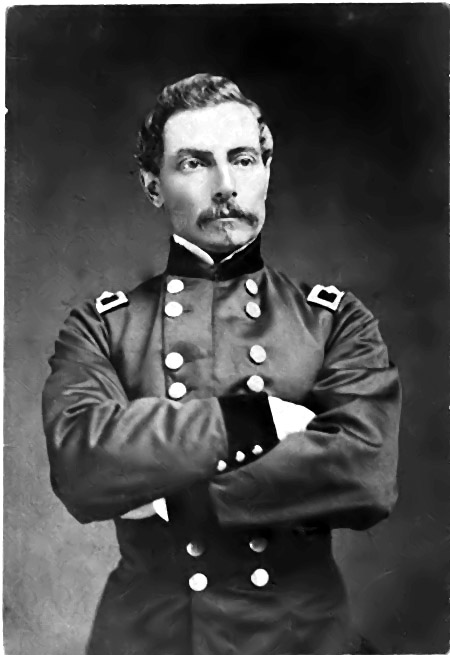 |
| P. G. T. Beauregard |
 |
| Joseph E. Johnson |
 |
| John B. Magruder |
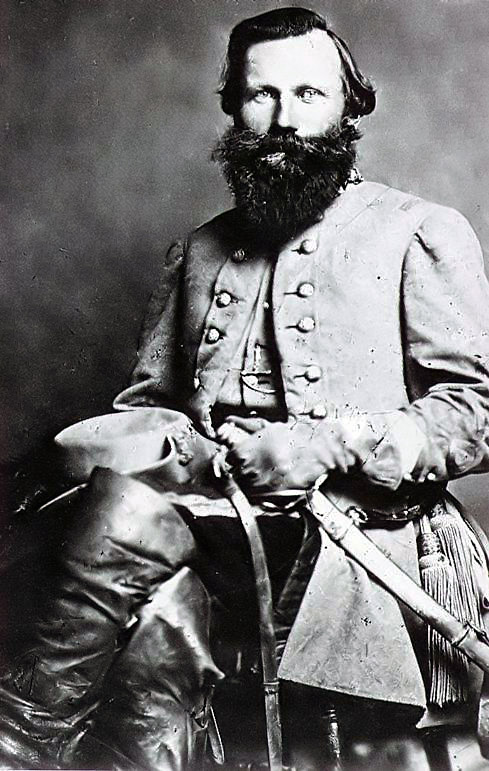 |
| James Ewell Brown "Jeb" Stuart |
Plan and Objectives
Both the Union and Confederate plans were the outflank the others left. The Union objectives were to make quick work of the bulk of the Confederate army, open a way to Richmond, and end the war. The Confederate objectives were to stop the Union from getting close to their capital, Richmond.
Execution
The Union brigade fired a few artillery rounds across Mitchell's Ford on the Confederate right, some of which hit Beauregard's headquarters in the Wilmer McLean house as he was eating breakfast, alerting him to the fact that his offensive battle plan had been preempted. Nevertheless, he ordered demonstration attacks north toward the Union left at Centreville. Bungled orders and poor communications prevented their execution.

Results
First Bull run (First Manassas) was the bloodiest and the largest of the battles in US history the Union casualties 460 killed and 1,124 wounded and 1,312 captured or missing and for the Confederate army they had casualties that were far less than the union the confederate army casualties were 387 killed, 1,582 wounded, and 13 missing. Union forces and civilians alike feared that Confederate forces would advance on Washington, D.C., with very little standing in their way.
Bibliography
- http://en.wikipedia.org/wiki/First_Battle_of_Bull_Run
- http://www.civilwar.org/battlefields/bullrun.html
